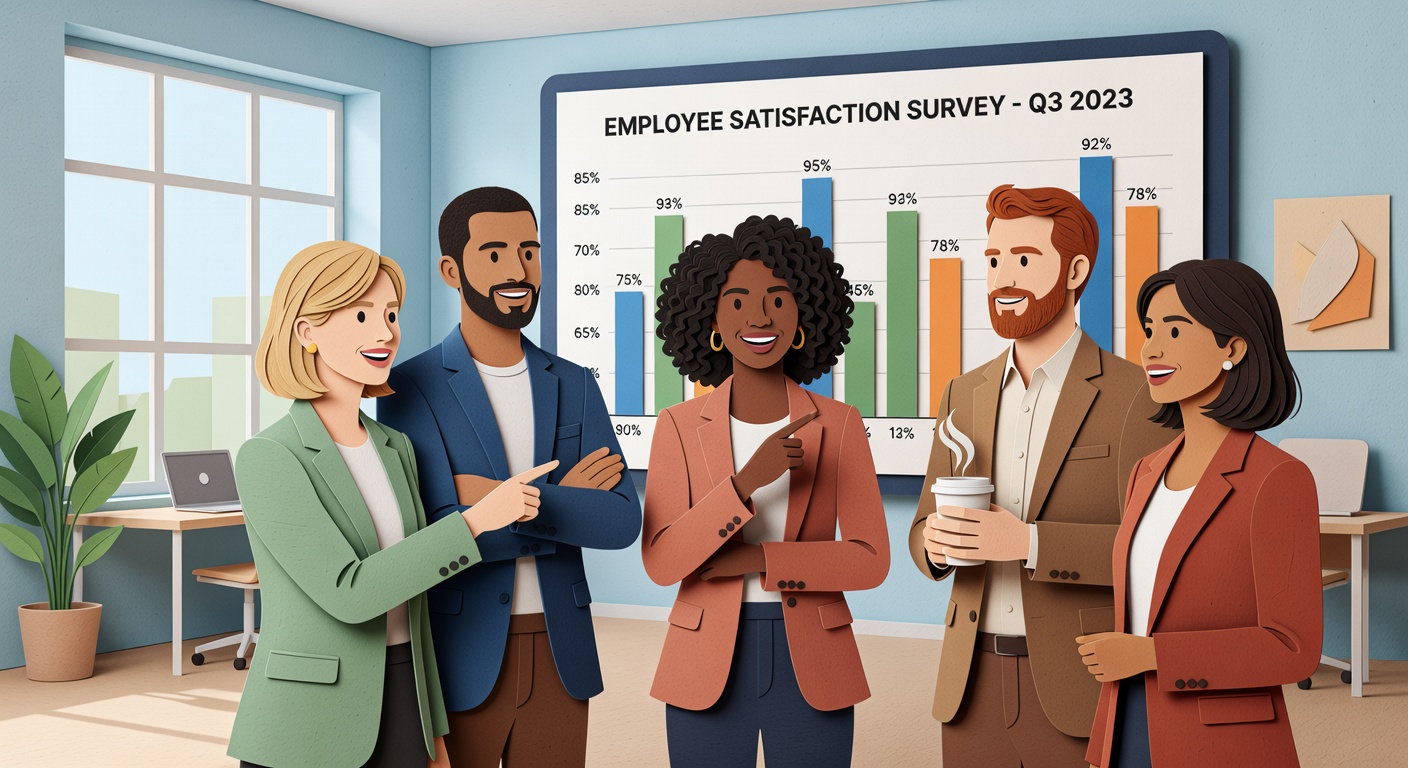
Best Employee Satisfaction Survey Software in 2023
Discover the best employee satisfaction survey software to boost retention, productivity, and engagement. Learn key features like anonymity, analytics, and cust
Ready to Launch Your Free Survey?
Create a modern, high-conversion survey flow with Spaceforms. One-question-per-page, beautiful themes, and instant insights.
Why Employee Satisfaction Surveys Matter
Employee satisfaction directly impacts your bottom line. Organizations with engaged, satisfied employees experience 23% higher profitability and 18% higher productivity, according to Gallup's State of the Global Workplace research. Regular satisfaction surveys help identify issues before they escalate into costly turnover.
Benefits for Retention and Productivity
Satisfied employees stay longer and perform better. When workers feel heard through structured feedback mechanisms, they're 4.6 times more likely to feel empowered to do their best work. The data speaks clearly: companies that systematically measure and improve employee satisfaction reduce turnover by up to 31%.
Beyond retention, satisfaction surveys reveal productivity blockers hiding in plain sight. Whether it's inadequate tools, unclear expectations, or poor communication, identifying these friction points enables targeted improvements that boost output without adding headcount.
Common Metrics to Track
Effective employee satisfaction surveys focus on actionable metrics. The most valuable include:
- Employee Net Promoter Score (eNPS): Measures likelihood to recommend your workplace
- Job satisfaction scores: Direct assessment of contentment with role and responsibilities
- Work-life balance ratings: Critical for preventing burnout
- Manager effectiveness: Leadership quality directly correlates with team satisfaction
- Career development opportunities: Future-focused metric for long-term retention
Key Features to Look for in Survey Software
Not all survey tools meet the unique demands of employee feedback. The best employee satisfaction survey software balances ease of use with robust features designed specifically for HR teams.
Anonymity and Data Security
Honest feedback requires trust. Your software must guarantee genuine anonymity, not just promise it. Look for platforms that don't collect IP addresses or metadata that could identify respondents. GDPR compliance and secure data encryption are non-negotiable for protecting sensitive employee information.
Customization and Mobile Responsiveness
Your workforce doesn't sit at desks all day. Mobile-first design ensures frontline workers, remote teams, and field employees can participate easily. Customization options let you brand surveys and tailor questions to different departments or locations without starting from scratch each time.
Analytics and Reporting Tools
Raw data means nothing without clear insights. Quality survey software includes data analytics dashboards that visualize trends, compare results across time periods, and segment responses by team or location. Real-time reporting helps HR teams act quickly on emerging issues.
Integrations with HR Systems
Standalone tools create extra work. Integration with platforms like BambooHR, Workday, or Slack streamlines distribution and consolidates employee data. This connectivity enables correlation analysis between satisfaction scores and other HR metrics like performance reviews or attendance.
Top Recommendations for Employee Satisfaction Software
Overview of Leading Tools
The market offers diverse options for every budget and team size. Enterprise platforms like Qualtrics and Culture Amp provide comprehensive engagement suites with advanced analytics. Mid-market tools such as SurveyMonkey and Officevibe balance features with affordability. For teams prioritizing simplicity, SpaceForms offers unlimited responses without cost barriers.
Comparison of Free vs Paid Options
| Feature | Free Tools | Paid Tools |
|---|---|---|
| Basic surveys | ✓ | ✓ |
| Unlimited responses | Limited (except SpaceForms) | ✓ |
| Advanced analytics | Basic | ✓ |
| HR integrations | Rare | ✓ |
| Dedicated support | Community only | ✓ |
Paid tools typically start at $50-300 monthly for small teams, scaling to thousands for enterprise features. Free options work well for startups and small businesses running pulse surveys or annual check-ins.
Spotlight on User-Friendly Alternatives
Many platforms overwhelm users with complexity. The best alternatives prioritize quick setup and intuitive design. Employee engagement templates let HR managers launch professional surveys in minutes rather than hours, eliminating the learning curve that delays feedback collection.
Quick Tip
Start with pulse surveys (5-10 quick questions) quarterly before committing to comprehensive annual surveys. This builds response habits and provides faster feedback loops for testing your chosen software.
How to Choose and Implement the Right Software
Step-by-Step Selection Process
Begin by defining your must-have features versus nice-to-haves. List your team size, survey frequency, and budget constraints. Request demos from 3-4 platforms, paying attention to actual setup time, not just marketing promises.
Test anonymity features thoroughly. Create test surveys and verify that response data truly cannot be traced. Involve IT in security assessments for enterprise tools handling sensitive employee information.
Best Practices for Survey Distribution
Timing impacts response rates dramatically. Avoid Monday mornings, month-end crunch periods, and holiday weeks. Tuesday through Thursday mid-morning yields optimal participation according to SHRM research.
Multi-channel distribution increases reach. Combine email invitations with Slack notifications, intranet posts, and manager reminders. Set a two-week response window with one reminder at the midpoint.
Tips for Analyzing Results
Look for patterns, not individual comments. Segment data by department, tenure, and role to identify specific problem areas. Compare current results against previous surveys to track improvement trends. Most importantly, share findings transparently and outline concrete action plans within two weeks of survey completion.
Common Challenges and Solutions
Low Response Rates
Response rates below 60% compromise data reliability. Combat survey fatigue by limiting frequency and keeping surveys under 15 minutes. Communicate how previous feedback led to tangible changes—employees participate when they see their input matters.
Executive participation signals importance. When leadership completes surveys first and shares their commitment publicly, response rates typically increase 15-20%.
Ensuring Honest Feedback
Fear of retaliation silences honest opinions. Reinforce anonymity guarantees repeatedly before and during survey periods. Consider third-party administration for highly sensitive topics. Avoid questions that could inadvertently identify respondents through demographic combinations.
Budget Constraints for Small Teams
Small businesses shouldn't sacrifice employee feedback due to cost. Free platforms with unlimited responses eliminate per-user fees that quickly escalate. SpaceForms provides enterprise-quality surveys without subscription barriers, making regular satisfaction tracking accessible to teams of any size.
Frequently Asked Questions
What makes employee satisfaction survey software different from general survey tools?
Employee satisfaction software emphasizes anonymity features, HR-specific question libraries, and engagement metrics like eNPS that generic tools don't prioritize. These platforms understand the sensitivity of workplace feedback and build trust mechanisms accordingly. They also offer benchmarking against industry standards and integration with HR systems that general survey tools lack.
Is there free software for employee satisfaction surveys?
Yes, several platforms offer free tiers suitable for employee satisfaction surveys. SpaceForms provides unlimited responses forever without cost, making it ideal for small businesses and startups. Other tools offer free plans with response limits that may work for very small teams conducting infrequent surveys.
How often should companies run employee satisfaction surveys?
Most organizations benefit from quarterly pulse surveys (5-10 questions) plus one comprehensive annual survey. Monthly surveys risk fatigue, while annual-only approaches miss emerging issues. Adjust frequency based on your company size and change pace—rapidly growing startups may need monthly check-ins, while stable organizations can stick to quarterly cadences.
What are the best practices for ensuring anonymous responses?
Choose software that doesn't collect IP addresses or require login credentials tied to employee records. Avoid demographic questions that could identify individuals in small departments. Communicate your anonymity protocols clearly and consider using independent survey administrators for particularly sensitive topics. Never attempt to identify respondents through writing style or response patterns.
Can employee survey software integrate with other HR tools?
Most paid platforms integrate with major HRIS systems like Workday, BambooHR, and ADP, plus communication tools like Slack and Microsoft Teams. These integrations automate survey distribution and enable correlation analysis between satisfaction scores and other HR metrics. Free tools typically offer fewer integrations but may provide API access for custom connections.
How do you measure ROI from employee satisfaction surveys?
Track turnover rates, time-to-fill for open positions, and productivity metrics before and after implementing satisfaction-driven changes. Calculate the cost of replacing employees (typically 50-200% of annual salary) against survey investment. Monitor engagement scores quarterly to demonstrate improvement trends. Many organizations see ROI within 6-12 months through reduced turnover alone.
What are common pitfalls in choosing survey software?
Overbuying features you won't use wastes budget and complicates adoption. Conversely, choosing tools lacking mobile responsiveness excludes frontline workers. Neglecting anonymity capabilities undermines response honesty. Finally, selecting platforms without clear reporting dashboards leaves you drowning in data without actionable insights. Test software with a pilot group before company-wide rollout.
How long should an employee satisfaction survey be?
Aim for 10-15 minutes maximum completion time, typically 20-30 questions for comprehensive annual surveys and 5-10 questions for pulse surveys. Longer surveys see 15-30% lower completion rates. Prioritize quality over quantity—ask only questions you're prepared to act on, avoiding survey fatigue that damages future response rates.
Ready to Launch Your Free Survey?
Create a modern, high-conversion survey flow with Spaceforms. One-question-per-page, beautiful themes, and instant insights.